Guide
Choosing the Right Fabric for Print
Cotton, rayon, linen, silk — a buyer's guide to fabric for screen printing.
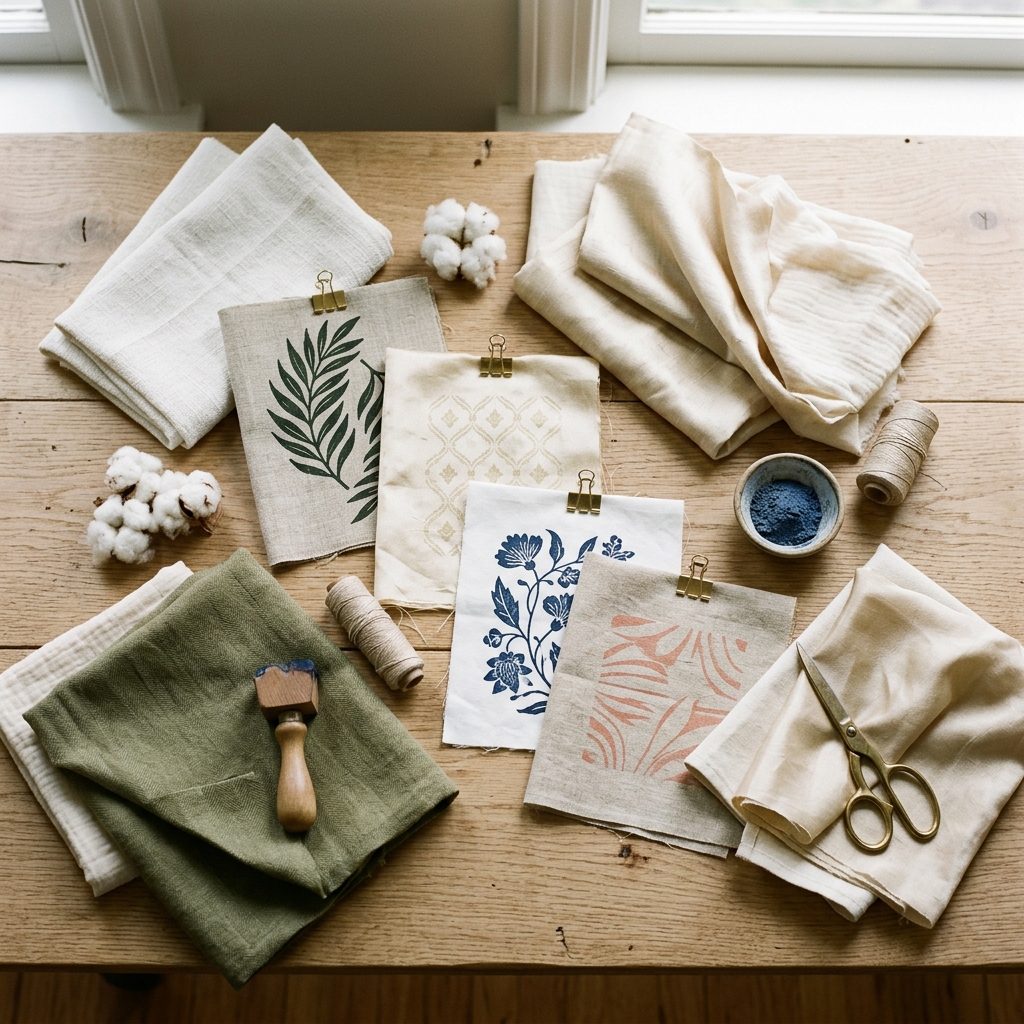
Fabric is half the print. The same screen and the same pigment will give you four completely different results on cotton, rayon, linen, and silk — and the difference matters more than most first-time buyers realise. Here's how we guide our clients.
Cotton is the safe default. It absorbs pigment evenly, holds colour for years, and washes well. Within cotton, weave matters: a 60-count cambric prints crisp lines and is ideal for sharp graphic prints; a 40-count poplin gives slightly softer edges and a fuller hand. For wholesale boutique runs, cambric and poplin together cover most use-cases.
Rayon (viscose) is fluid, drapey, and prints with a slightly higher saturation than cotton because the fibre is smoother. The trade-off is that rayon shrinks more aggressively and demands a more careful curing step. For flowing dresses, scarves and dupattas where drape matters more than structure, rayon is unbeatable.
Linen is the prestige base — but it's also the most demanding. Its natural slubs absorb pigment unevenly, which is either a feature or a bug depending on the print. Bold, large-scale prints sing on linen. Fine-line prints can look broken. We always recommend a strike-off on linen before committing to a bulk run.
Silk — habotai, crepe, georgette — gives the deepest, most luminous colour of any base, but the screens have to be lighter, the pigment thinner, and the pulls gentler. It's the right choice for premium scarves, special-occasion saris, and luxury bridal fabric. It's the wrong choice for a 1000-metre boutique drop unless your price point supports it.
Our usual advice for a first-time client: order strike-offs on two or three bases before deciding. A 1-metre sample on each fabric costs almost nothing and removes 90% of the guesswork. After that, your bulk order behaves exactly the way you expected.