Craft
The Art of Screen Printing
How a 2000-year-old craft still beats digital printing on hand-feel and depth.
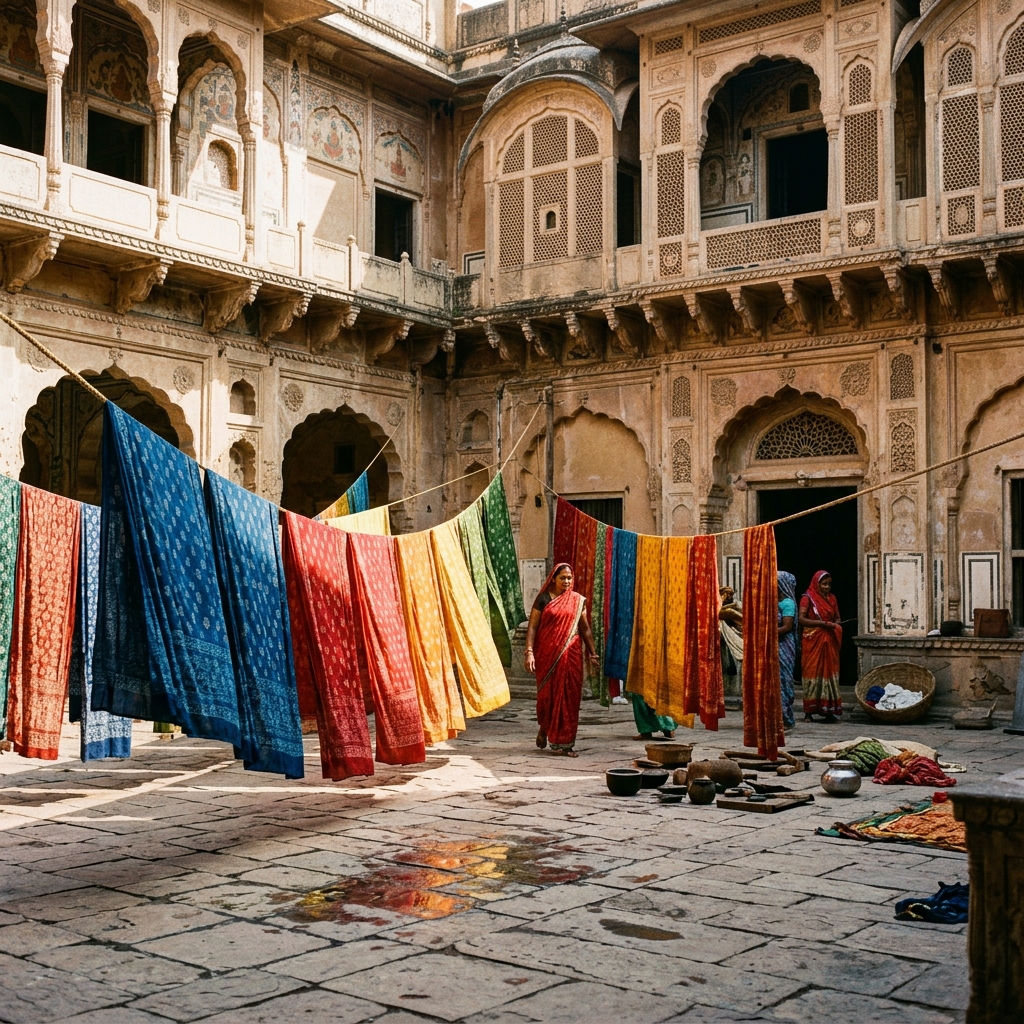
Screen printing is one of the oldest surface-design techniques humans ever invented. The earliest documented examples date back to the Song dynasty in China, but the craft as we practise it in Sanganer, Jaipur, has been refined over five centuries — block to block, screen to screen, generation to generation.
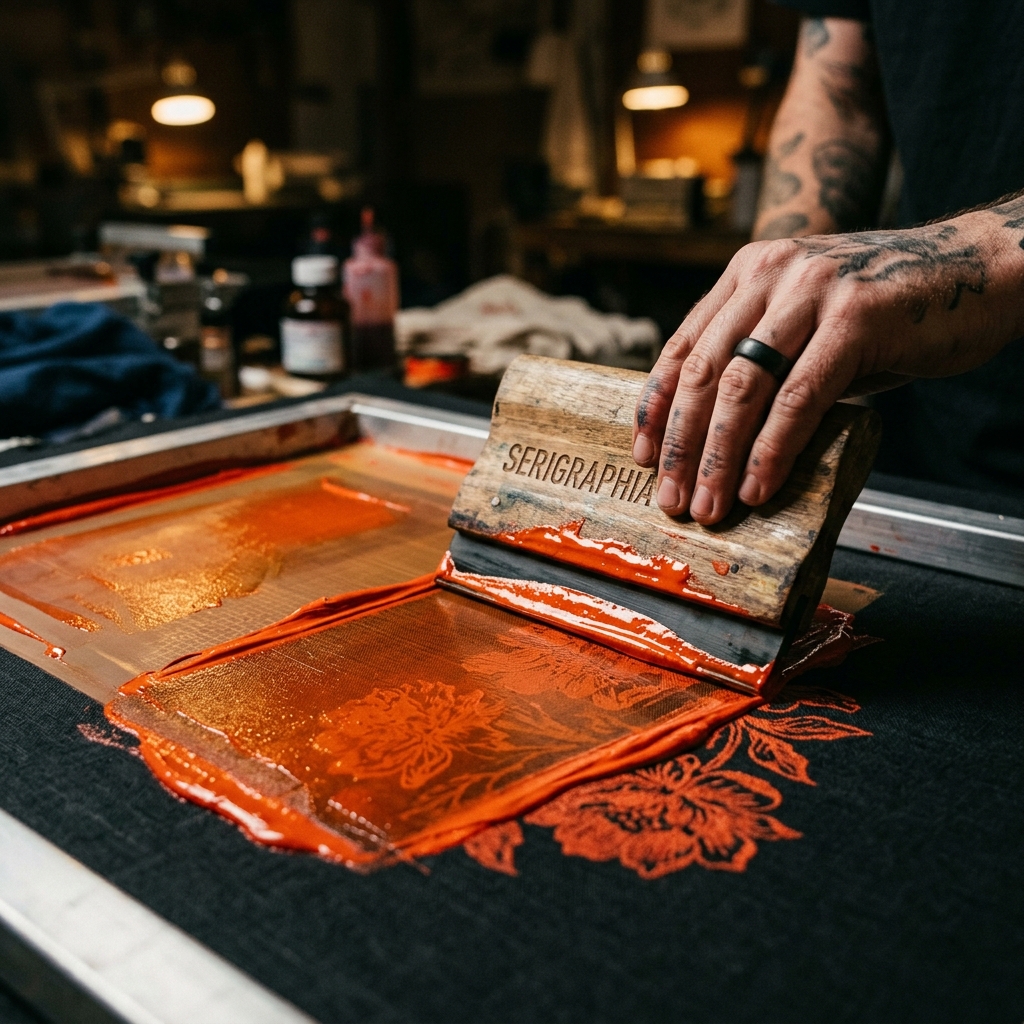
At its heart, the process is deceptively simple: a fine mesh screen is stretched over a frame, areas are blocked off, and pigment is pulled across the open mesh onto fabric below. Each colour gets its own screen. Each screen gets its own pull. A six-colour print isn't six steps — it's six small acts of hand-craft, repeated metre after metre.
What digital printing can't match is the way ink sits on the cloth. A digitally printed fabric carries pigment that has been atomised onto the surface; the dye sits on top, slightly stiff, slightly flat. A hand-pulled screen print pushes pigment into the weave. The result has depth, hand-feel, and a faint topography you can read with your fingertips.
There's also the question of colour. Our colour mixer hand-mixes every base shade against a reference swatch — sometimes a fabric snip, sometimes a paint chip, sometimes a photograph. Digital printers approximate; we match. Repeat orders months later use the same logged formula, so a brand's signature pink stays a signature.
Of course, screen printing has limits. Photo-real gradients are difficult. Tiny fonts can break. And every additional colour adds a screen, a setup, and a pull. But for designs built around clean shapes, layered patterns, and rich solid colours — the floral jaals, the paisley fields, the bold stripes our clients order by the thousand metres — nothing else comes close.
When a boutique buyer asks us why their cotton kurta drape feels different from a fast-fashion equivalent, the answer is in the print. Screen printing isn't slower because we're stuck in the past. It's slower because the result is worth the time.